Random coverage depends on overlap
A changing-direction mower may cross one patch several times before reaching another. Over enough operating time, those overlapping passes can maintain a simple lawn without storing a lane-by-lane plan. The method can look inefficient during a short observation, so judge it across the manufacturer’s recommended schedule. Narrow offshoots, separated zones, or a capacity mismatch can still leave persistent misses that additional random travel does not solve well.
Systematic routes make coverage legible
A systematic mower divides mapped space into lanes or sections and follows an ordered pattern. The app may offer direction, spacing, checkerboard, or alternating-angle choices. This can make progress easier to understand and may reduce unnecessary travel, but only if positioning stays accurate. Lane planning does not guarantee close edge cutting, successful docking, or obstacle recognition; those remain separate parts of the mower’s design.
Pattern direction changes turf traffic
Repeated travel in one direction can emphasize wheel tracks or lay grass consistently, especially on damp or soft soil. Alternating the lane angle between cycles spreads turning and traffic across the area. On slopes, however, the safest direction may be constrained by the exact product instructions and traction conditions. Choose a visual pattern only after confirming that the mower can execute it without slipping, scalping, or making damaging turns.
Charging interruptions test route memory
A mower sized near its limit may need to recharge before completing a cycle. Check whether it returns to the unfinished section, begins an entirely new random sequence, or lets the user prioritize zones. Reliable resumption matters more on large and multi-zone lawns than a single attractive pattern screenshot. Firmware, map quality, station access, and the available mowing window all influence whether planned coverage is completed in practice.
Inspect missed areas instead of admiring lines
During supervised early cycles, mark grass repeatedly missed behind obstacles, inside corners, at passage entrances, and beside zone connections. Also note excessive turning in one fragile patch. Adjust the map, schedule, boundary, or pattern only when the exact model supports that change. A random mower that maintains every permitted area is doing its job; a systematic mower leaving neat lanes around an untouched pocket still needs correction.
For a product-led next step, compare Wire-Free Robotic Lawn Mowers or use the yard-fit finder.
Products to evaluate against this advice
As an Amazon Associate, we may earn from qualifying purchases.

ANTHBOT Genie 3000 Wire-Free Robotic Lawn Mower for Large Yards
The Genie 3000 is the high-capacity member of the verified Genie group. Its value is less about owning the biggest model and more about whether the yard requires several mapped areas, long travel distances and dependable route planning between them.
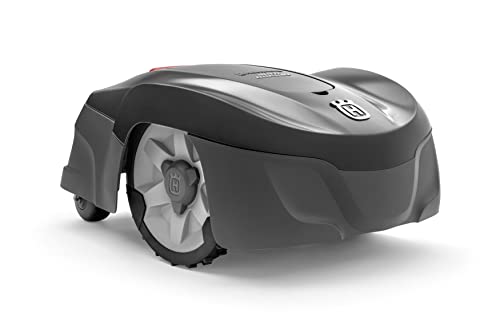
Husqvarna Automower 115H 4G Robotic Lawn Mower for 0.4 Acre
The Automower 115H 4G is a useful benchmark for owners who value an established boundary-wire system over antenna placement or camera mapping. Its high-cut orientation can suit common residential turf, but the cable installation and current listing availability should be weighed before purchase.

ECOVACS GOAT O1000 RTK Wire-Free Robot Lawn Mower for 1/4 Acre
The GOAT O1000 RTK targets buyers who want virtual boundaries without moving to a large-property machine. Its combination of satellite positioning and visual sensing is most relevant where the yard has a usable sky view and clear passages rather than dense tree cover at every edge.
Frequently asked questions
Is systematic mowing always faster?
Not always. Ordered lanes can reduce overlap, but turns, obstacles, charging, slope behavior, passage access, and positioning interruptions affect total completion time. Compare performance in a yard like yours.
Why does a random robot mower revisit the same patch?
Overlap is part of changing-direction coverage. Repeatedly circling or failing to leave one area can instead indicate a passage problem, slipping, an obstacle, or a boundary-layout issue.
Do planned lanes create lawn stripes?
They can make directional lines more visible, but grass type, cutting height, wheel path, mowing direction, and light all affect the appearance. A robot mower is not automatically a striping machine.
Bottom line
Use the answer above as a decision framework, then verify the exact product manual, current listing and conditions in your own lawn. Model generations, software features and included accessories can change.