Boundary wire defines a physical signal
A perimeter cable creates a detectable limit around the lawn and protected islands. It can work beneath tree cover where satellite reception is difficult, but installation requires planning and later digging can damage the loop. Passage width, wire spacing and station placement must follow the exact manual rather than a generic online diagram.
RTK improves satellite positioning
RTK systems compare positioning data with a fixed reference source to improve location accuracy. They work best when antennas and the mower have the sky view specified by the maker. Dense canopy, tall walls or a poorly placed reference station can interrupt performance, so buyers should map obstructions before choosing this format.
Vision reads the scene
Camera-based systems look for lawn edges, objects or learned visual cues. Their behavior can change with lighting, seasonal color, leaves and ambiguous borders. Vision can reduce physical installation, but a curb, pond or open street still deserves the protective treatment required in the instructions rather than confidence based on a demonstration video.
LiDAR measures surrounding shapes
Laser-based sensing can build a geometric view of nearby objects and spaces. It does not make every yard effortless: moving furniture, reflective surfaces, dense growth and major layout changes may still require remapping or exclusion zones. Compare the stated operating conditions and mapping workflow, not the sensor label alone.
Hybrid systems use several signals
Many mowers combine wheel rotation, inertial sensing, bump detection and other inputs with their primary navigation method. That redundancy can help, but software quality and a careful setup remain important. Before purchase, read the current installation guide and check whether map editing, multiple zones and recovery after signal loss match the property.
For a product-led next step, compare Wire-Free Robotic Lawn Mowers or use the yard-fit finder.
Products to evaluate against this advice
As an Amazon Associate, we may earn from qualifying purchases.

ANTHBOT M5 RTK and Vision Robotic Lawn Mower
The non-LiDAR M5 ASIN belongs on its own page only because Amazon identifies a different navigation configuration. It may appeal to yards with good satellite visibility, while the similarly named LiDAR version warrants separate setup and obstacle-detection questions.
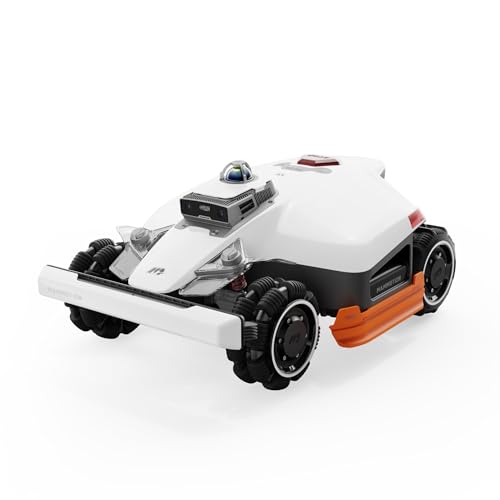
Mammotion LUBA 3 AWD 3000H Robot Lawn Mower for 0.75 Acre
The LUBA 3 AWD 3000H is specifically the high-cut 3000H identity, not a generic LUBA 3. Its 80% slope claim and multi-sensor navigation target demanding properties, but weight, wet-ground behavior and access between zones deserve close scrutiny.

ECOVACS GOAT O1000 RTK Wire-Free Robot Lawn Mower for 1/4 Acre
The GOAT O1000 RTK targets buyers who want virtual boundaries without moving to a large-property machine. Its combination of satellite positioning and visual sensing is most relevant where the yard has a usable sky view and clear passages rather than dense tree cover at every edge.
Frequently asked questions
Can a robot mower work without a boundary wire?
Yes, some models use virtual maps and positioning sensors. Suitability depends on the property's sky view, borders and hazards.
Does GPS alone prevent collisions?
Not necessarily. Obstacle handling usually relies on additional sensors and software. Small, low or moving objects may still need to be removed.
Will trees stop a wire-free mower?
They can weaken some positioning methods. Check the manufacturer's coverage requirements and evaluate canopy around the entire route, not only the charging station.
Bottom line
Use the answer above as a decision framework, then verify the exact product manual, current listing and conditions in your own lawn. Model generations, software features and included accessories can change.