The camera must separate lawn from non-lawn
A person instantly distinguishes turf from mulch, pavement, water, and a flower bed. Software must infer those categories from color, texture, shape, and context. Crisp physical edges are easier than grass blending into similar vegetation. During setup, inspect ambiguous borders and add virtual exclusions or physical barriers when the manufacturer recommends them.
Object recognition adds meaning
A ranging sensor may report that something occupies space, while a vision model can attempt to classify it as a person, animal, toy, branch, or plant. Classification can improve route choices, yet small, hidden, transparent, or unfamiliar objects may be missed. Keep the lawn free of cords, tools, pet waste, and other hazards despite the obstacle list advertised.
Lighting changes the input
Harsh glare, deep shadow, darkness, rain on a lens, and rapidly changing sun can alter the image. Some products add low-light hardware or pair cameras with sensors that do not need visible light. If nighttime mowing is important, verify that the exact mower supports it rather than assuming every camera-guided system can navigate equally well after sunset.
Lens care becomes maintenance
Dust, pollen, clippings, water spots, and insects can cover a small outdoor lens. Check the viewing windows during routine cleaning and use only the method allowed by the manual. Scratches or harsh chemicals can permanently reduce image quality. Repeated recognition errors after cleaning may require recalibration, updated software, or manufacturer support.
Privacy deserves deliberate placement
Outdoor cameras can capture more than grass. Aim setup routes and charging areas away from neighboring windows and private spaces when practical. Review whether images are processed on the mower, phone, or cloud; understand account-sharing controls; and apply security updates. A camera used for navigation should still be treated as a connected imaging device.
For a product-led next step, compare Wire-Free Robotic Lawn Mowers or use the yard-fit finder.
Products to evaluate against this advice
As an Amazon Associate, we may earn from qualifying purchases.
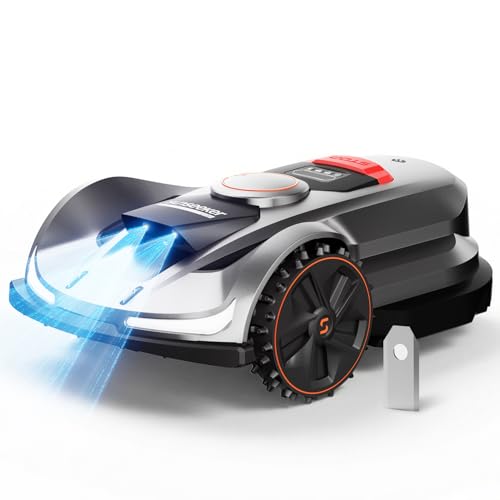
Sunseeker X7 AWD Wire-Free Robot Lawn Mower for 0.75 Acre
The X7 AWD combines a larger residential coverage class with four-wheel traction. It deserves attention on rolling properties where a two-wheel robot may lose grip, although buyers still need to judge satellite visibility, narrow corridors and the actual steepest mowing line in the yard.

YARDCARE V100 Robot Lawn Mower with HD Vision Navigation
The V100 is a modest-capacity vision mower aimed at straightforward lawns. Its camera and collision sensors reduce reliance on buried wire, but buyers should evaluate how the lawn edge looks to a camera under shadows, leaves and changing seasonal color.
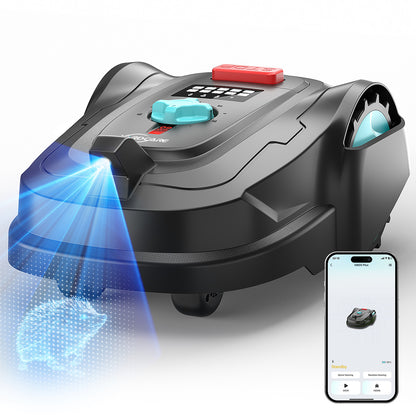
YARDCARE M800Plus Cordless Robot Lawn Mower for 1/5 Acre
The M800Plus moves beyond the V100’s tiny-lawn positioning with GPS plus visual navigation and a one-fifth-acre rating. Its fit depends on whether the mapping approach can handle the property’s tree cover and whether all grass areas are reachable from one base.
Frequently asked questions
Can a vision mower work without boundary wire?
Yes, some models use cameras to identify lawn edges and build virtual maps. Yard suitability varies, especially where turf blends into beds or neighboring grass with no clear boundary.
Will a camera mower recognize dog poop?
Some manufacturers describe small-object detection, but pet waste can vary in size, color, and visibility. Owners should remove it before mowing rather than rely on guaranteed recognition.
Does vision navigation require cloud AI?
Not always. Processing may occur onboard, in an app, in the cloud, or across several locations. Connectivity requirements and privacy terms should be checked for the specific product.
Bottom line
Use the answer above as a decision framework, then verify the exact product manual, current listing and conditions in your own lawn. Model generations, software features and included accessories can change.