Separate a route problem from a machine problem
Walk the area where the mower repeatedly stops. Look for a hole, exposed root, narrow passage, soft soil, steep transition or raised edging. Move the mower to a simple open section and run a supervised test. Normal operation there suggests the difficult location needs grading, a map adjustment or a physical boundary change.
Check charging before blaming the battery
A crooked station, dirty contacts or interrupted outlet can leave the mower partially charged even when it appears docked. Disconnect power according to the manual, clean only with the recommended method and confirm that the base sits level. If charge duration or runtime has declined gradually, record several cycles before considering battery replacement.
Inspect the cutting system safely
Turn the mower off, use any required lockout control and wear gloves before looking underneath. Packed clippings can restrict a floating deck, while damaged or unevenly worn blades may increase noise and reduce cut quality. Replace blades as a complete matched set when the manual requires it so the disc remains balanced.
Review maps, wires and recent yard changes
New landscaping, a repaired fence, moved station or changed Wi-Fi equipment can alter navigation. For wired systems, inspect likely disturbance points instead of replacing the whole loop. For virtual-boundary models, verify the saved work area, antenna or reference-station position and satellite conditions described by the manufacturer.
Know when to stop troubleshooting
Water inside an enclosure, burned wiring, a swollen battery, damaged charging hardware or repeated electrical errors calls for qualified service. Do not bypass lift sensors, covers or charging protections. Save photographs and error history for support, along with the serial number and proof of purchase, because a clear record shortens the diagnostic conversation.
For a product-led next step, compare Robotic Lawn Mowers for Hills or use the yard-fit finder.
Products to evaluate against this advice
As an Amazon Associate, we may earn from qualifying purchases.
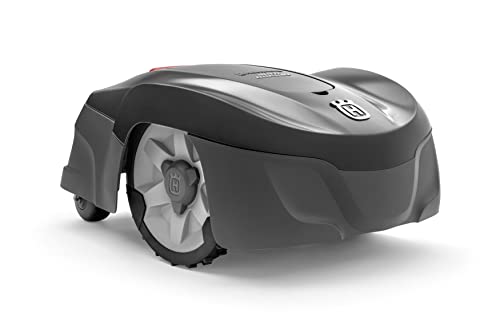
Husqvarna Automower 115H 4G Robotic Lawn Mower for 0.4 Acre
The Automower 115H 4G is a useful benchmark for owners who value an established boundary-wire system over antenna placement or camera mapping. Its high-cut orientation can suit common residential turf, but the cable installation and current listing availability should be weighed before purchase.

LawnMaster OcuMow VBRM601YCM MAX Wire-Free Robot Lawn Mower
The OcuMow MAX extends LawnMaster’s optical concept into a higher square-foot band. It is a stronger candidate than the smaller portable model when the lawn is still simple but takes too long for repeated short sessions; complex islands and indistinct edges remain the important caveats.

ANTHBOT M9 Wire-Free Robotic Lawn Mower with Garage for 1/4 Acre
The M9 listing is notable because shelter is part of the bundle rather than a separate compatibility purchase. That can simplify installation planning, though buyers should still distinguish the garage from the charging base and verify how the mower maps shaded or tree-lined sections.
Frequently asked questions
Why does my robot mower stop in one spot?
The location may have poor traction, an obstacle, a boundary conflict or weak navigation conditions. Reproduce the problem under supervision and inspect that exact patch.
Should I reset the mower first?
Usually not. Record errors and settings before a reset, because erasing evidence can make an intermittent problem harder to isolate.
Can wet grass cause errors?
Wet clippings can accumulate and slopes can lose traction. Follow the model's weather guidance and inspect the deck only after safe shutdown.
Bottom line
Use the answer above as a decision framework, then verify the exact product manual, current listing and conditions in your own lawn. Model generations, software features and included accessories can change.