Compare the correct slope specification
Use the measured steepest section to screen products, but read what each rating actually covers. A maximum climb, interior operating slope, boundary slope and docking-route limit may be different. Convert degrees and percent grade correctly, and verify the figure in documentation for the exact model. Marketplace headings and claims borrowed from another mower in the brand family are not dependable buying evidence.
Evaluate the complete traction system
Driven wheels, tread pattern, weight distribution, wheel diameter and software all affect hill behavior. AWD may improve grip and steering, while a two-wheel-drive design can still suit moderate grades when properly sized. Look for approved terrain wheels or traction accessories, then check whether they change clearances or turf impact. Unofficial add-ons can create new wear, turning or warranty problems.
Check turns and cross-slope operation
A mower that climbs straight uphill can behave differently while turning at the top or traversing the face. Review route-direction controls and any documented cross-slope restrictions. Systematic lane choices may reduce awkward turns when the model allows them. Narrow crests, compound slopes and transitions into flat paving deserve special attention because a single maximum number does not describe those movements.
Match boundaries and docking to the hill
A model still needs a compliant boundary and a reliable trip to its charger. Compare required setbacks at the top and bottom, limits near retaining walls or water, and the allowed grade around the station. A virtual line or boundary wire does not physically stop a sliding mower. If a failure could send the machine toward a road, stair or pond, plan an appropriate barrier or exclude the area.
Prefer controllable testing and support
Good setup controls let an owner begin with a conservative zone, supervised daylight schedule and higher margin before expanding coverage. Error history, traction warnings and accessible support make a marginal fit easier to diagnose. Confirm who supplies parts and service for the exact mower. A model with a slightly lower headline rating may be the better purchase when its limits and recovery behavior are documented clearly.
For a product-led next step, compare Robotic Lawn Mowers for Hills or use the yard-fit finder.
Products to evaluate against this advice
As an Amazon Associate, we may earn from qualifying purchases.
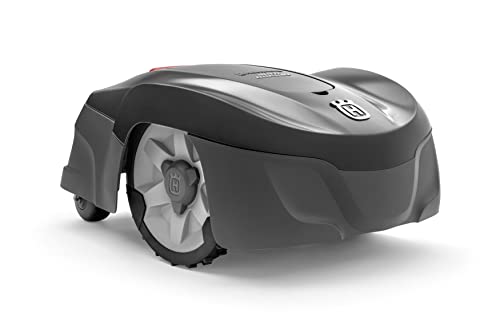
Husqvarna Automower 115H 4G Robotic Lawn Mower for 0.4 Acre
The Automower 115H 4G is a useful benchmark for owners who value an established boundary-wire system over antenna placement or camera mapping. Its high-cut orientation can suit common residential turf, but the cable installation and current listing availability should be weighed before purchase.

LawnMaster OcuMow VBRM601YCM MAX Wire-Free Robot Lawn Mower
The OcuMow MAX extends LawnMaster’s optical concept into a higher square-foot band. It is a stronger candidate than the smaller portable model when the lawn is still simple but takes too long for repeated short sessions; complex islands and indistinct edges remain the important caveats.

Redkey MGC1000 Robot Lawn Mower for 1/4 Acre and 45% Slopes
The MGC1000 pairs a conventional perimeter-wire layout with an unusually prominent slope claim for its price-oriented segment. The wired approach can be dependable after installation, but repair access and correct cable routing deserve as much attention as the mower itself.
Frequently asked questions
Which mower specification matters most for a steep yard?
The continuous operating limit for the exact terrain and route matters more than a generic maximum climb. Boundary, docking and cross-slope limits may be lower and must also fit.
Should I buy a mower rated exactly for my measured hill?
Leave a practical margin and verify travel direction, surface and weather conditions. A headline maximum should not be treated as a comfortable everyday target.
Is AWD worth paying for on a slope?
It can be valuable when added traction and steering address the measured yard, but it cannot correct an unsafe runout, poor boundary, unsuitable surface or rating below the required grade.
Bottom line
Use the answer above as a decision framework, then verify the exact product manual, current listing and conditions in your own lawn. Model generations, software features and included accessories can change.