Classify the irregularities
Walk the yard after rain and during dry weather. Mark holes, roots, drainage channels, mole damage, soft patches and high crowns. Long rolling contours are different from abrupt vertical changes. Take measurements of the deepest rut and steepest transition instead of describing everything as bumpy. This record helps distinguish a mower-fit issue from lawn repair that should happen before automation.
Prepare the route before judging hardware
Fill dangerous holes, secure loose edging and create smooth ramps between permitted surfaces. Trim roots only when doing so will not harm the tree; an arborist may be appropriate. A robot repeatedly striking the same defect can damage turf and consume battery even if it eventually escapes. Basic grading often improves reliability more than selecting an exaggerated off-road design.
Compare chassis behavior
Look at wheel diameter, ground clearance, driven wheels and whether the deck follows the surface independently. A rigid low body may bridge a hollow and lose traction, while a highly articulated machine may maintain contact. These observations must come from exact documentation or credible demonstrations for the selected model. Do not borrow terrain claims from another mower in the same brand family.
Prevent scalping and missed grass
A deck that moves over contours can reduce gouging, but cutting height still needs to suit the turf and seasonal conditions. Begin higher and inspect the first supervised passes for exposed soil, wheel spin and untouched pockets. Lower gradually only when the surface remains healthy. Correct wheel ruts early because repeated traffic can deepen a small depression into a recurring trap.
Create exclusions for unfixable areas
Tree-root clusters, drainage swales and construction zones may need virtual or wired islands. Keep exclusions wide enough for turning rather than tracing every bump tightly. If the only path between lawn sections contains an unacceptable transition, plan to carry the mower or treat the sections separately. The goal is dependable maintenance of suitable grass, not forcing every square foot into the route.
For a product-led next step, compare Robotic Lawn Mowers for Hills or use the yard-fit finder.
Products to evaluate against this advice
As an Amazon Associate, we may earn from qualifying purchases.
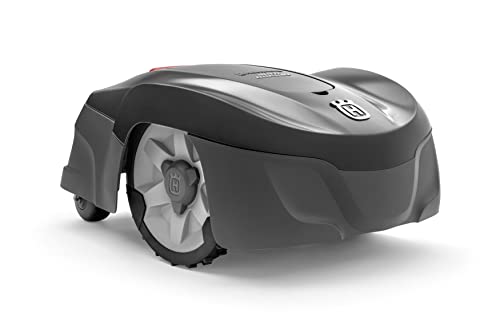
Husqvarna Automower 115H 4G Robotic Lawn Mower for 0.4 Acre
The Automower 115H 4G is a useful benchmark for owners who value an established boundary-wire system over antenna placement or camera mapping. Its high-cut orientation can suit common residential turf, but the cable installation and current listing availability should be weighed before purchase.

LawnMaster OcuMow VBRM601YCM MAX Wire-Free Robot Lawn Mower
The OcuMow MAX extends LawnMaster’s optical concept into a higher square-foot band. It is a stronger candidate than the smaller portable model when the lawn is still simple but takes too long for repeated short sessions; complex islands and indistinct edges remain the important caveats.

ANTHBOT M9 Wire-Free Robotic Lawn Mower with Garage for 1/4 Acre
The M9 listing is notable because shelter is part of the bundle rather than a separate compatibility purchase. That can simplify installation planning, though buyers should still distinguish the garage from the charging base and verify how the mower maps shaded or tree-lined sections.
Frequently asked questions
Can a robotic mower cross exposed roots?
Some may cross low broad roots, but repeated contact can strand the mower or harm turf and equipment. Map around significant roots and protect the tree.
Does more ground clearance always help?
Clearance helps prevent bottoming out, yet stability, deck design and cutting-height range also matter. A higher body is not a complete terrain solution.
Should I level the lawn first?
Repair holes, loose edges and severe ruts before installation. Gentle natural contours can remain when the chosen mower documents suitable terrain behavior.
Bottom line
Use the answer above as a decision framework, then verify the exact product manual, current listing and conditions in your own lawn. Model generations, software features and included accessories can change.