Record the pattern instead of the aftermath
Note whether one wheel spins, both wheels spin, the nose lifts, or the chassis grounds out. Mark the location and observe it from a safe distance during a supervised pass. A machine that slips everywhere suggests dirty or worn running gear; a failure at one corner usually points to terrain, boundary geometry, irrigation, or a transition.
Restore the original tread
Shut the mower down and use the approved handling position. Brush mud and compressed clippings from tire blocks, wheel wells, and caster areas without pushing material behind seals. Check for twine, roots, or landscape fabric wrapped near an axle. Compare left and right tread wear. A cracked wheel, loose hub, or bearing play is a parts issue, not a cleaning challenge.
Measure the actual grade
A short bank can be steeper than it appears, particularly near the lower transition where the chassis changes angle. Measure rise and run in the direction the mower travels, then convert that result to the same unit—degrees or percent—used by the manufacturer. Capacity claims generally assume usable traction; wet clay, leaves, and loose thatch reduce the practical margin.
Repair the route before modifying the robot
Fill depressions, stabilize soft soil, move exposed stones, trim a raised edge, or reshape an abrupt crest with appropriate landscaping. Adjust a boundary turn according to installation spacing rather than forcing a pivot on a slope. Persistent wheel digging damages turf and makes the hole deeper, so exclude the area until the surface has recovered.
Be cautious with aftermarket traction parts
Studs, spikes, heavy wheels, and added ballast change ground pressure, clearance, motor load, and stopping behavior. They may also catch boundary wire or irrigation components. Confirm written compatibility for the exact mower and consider the warranty before fitting anything. Mechanical noise, hot wheel motors, asymmetric travel, or an error on flat clean ground warrants authorized diagnosis.
For a product-led next step, compare Wire-Free Robotic Lawn Mowers or use the yard-fit finder.
Products to evaluate against this advice
As an Amazon Associate, we may earn from qualifying purchases.
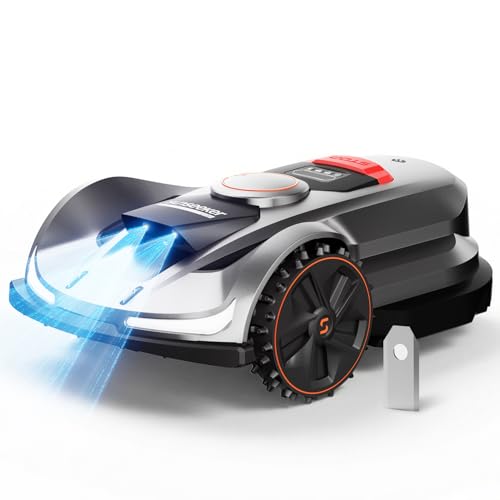
Sunseeker X7 AWD Wire-Free Robot Lawn Mower for 0.75 Acre
The X7 AWD combines a larger residential coverage class with four-wheel traction. It deserves attention on rolling properties where a two-wheel robot may lose grip, although buyers still need to judge satellite visibility, narrow corridors and the actual steepest mowing line in the yard.
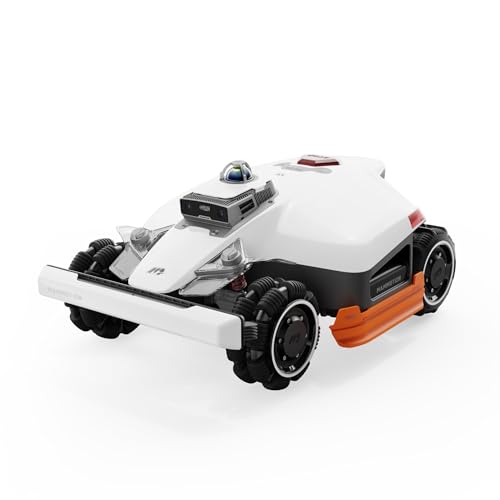
Mammotion LUBA 3 AWD 3000H Robot Lawn Mower for 0.75 Acre
The LUBA 3 AWD 3000H is specifically the high-cut 3000H identity, not a generic LUBA 3. Its 80% slope claim and multi-sensor navigation target demanding properties, but weight, wet-ground behavior and access between zones deserve close scrutiny.
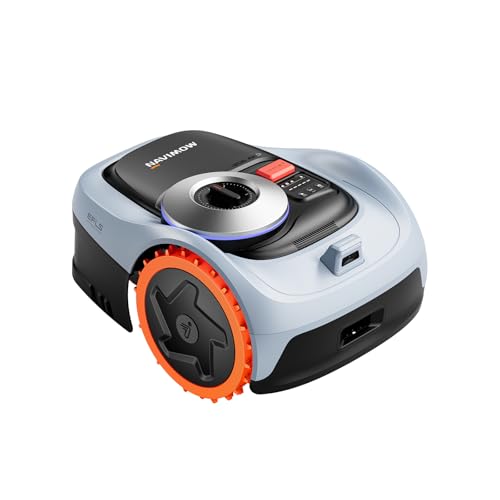
Segway Navimow i206 AWD Wire-Free Robot Lawn Mower for 0.15 Acre
The i206 AWD is identified by Amazon as a newer successor in the small-yard Navimow line. Its stronger slope claim and all-wheel drive make it a distinct choice from the i105N rather than a cosmetic refresh, particularly on short but uneven lawns.
Frequently asked questions
Do wheel spikes help on hills?
They may help certain approved setups, but they can tear turf and stress components. Correct wetness, route geometry, and surface defects before adding hardware.
Why does the mower slip only in the morning?
Dew can reduce traction even when the grade is unchanged. Moving the schedule later may solve a condition-dependent problem.
Can I add weight over the drive wheels?
Avoid improvised ballast. It changes load and safety behavior and may exceed the chassis or motor design.
Bottom line
Use the answer above as a decision framework, then verify the exact product manual, current listing and conditions in your own lawn. Model generations, software features and included accessories can change.