Choose the right moment
Clean after the mower is dry enough that buildup will brush away, not immediately after it has crossed wet turf. End the schedule so an app command cannot launch it, activate the physical stop and main power controls, and wait for complete stillness. If the machine recently charged or worked in hot weather, let it cool on a nonflammable surface before handling.
Protect both yourself and the chassis
Wear cut-resistant gloves because stationary blades remain sharp. Use the designated handle and turning procedure; some machines should be tilted onto a particular side rather than placed fully upside down. Lay down a mat or folded towel that will not block ventilation or press on navigation hardware. Never lift by a cutting guard, wheel, antenna mast, or charging flap.
Remove debris from open spaces first
A soft detailing brush, wooden stick, or blunt plastic scraper can release dried clippings around the deck, wheel wells, skid plate, and cutting-disc perimeter. Work outward so material does not pack beneath seals. Avoid metal picks near wiring and do not spin drive wheels forcefully. String, landscape fabric, and long grass wound around an axle may require the user-service procedure rather than pulling.
Use moisture sparingly
Wipe compatible plastic surfaces with a damp—not dripping—cloth and use only cleaning products named by the manufacturer. Solvents, oils, silicone sprays, and abrasive cleaners can attack plastics or contaminate traction. Even a washable model may have conditions about nozzle pressure, orientation, temperature, or closed connector caps. Charging plates are usually better cleaned by the documented dry method.
Turn cleaning into an inspection
Look for chipped blades, loose fasteners, a warped disc, cracked guards, damaged wheel tread, blocked drain paths, and cuts around the charging or sensor areas. Return the mower upright, let it dry fully, and confirm all covers are closed before restoring power. A grinding sound, fluid inside a sealed lens, corrosion, or looseness at a spindle calls for service rather than another wash.
For a product-led next step, compare Robotic Lawn Mowers for Hills or use the yard-fit finder.
Products to evaluate against this advice
As an Amazon Associate, we may earn from qualifying purchases.
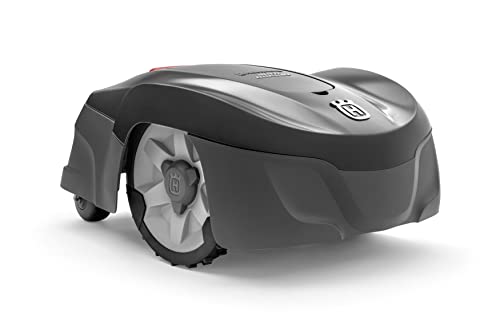
Husqvarna Automower 115H 4G Robotic Lawn Mower for 0.4 Acre
The Automower 115H 4G is a useful benchmark for owners who value an established boundary-wire system over antenna placement or camera mapping. Its high-cut orientation can suit common residential turf, but the cable installation and current listing availability should be weighed before purchase.

LawnMaster OcuMow VBRM601YCM MAX Wire-Free Robot Lawn Mower
The OcuMow MAX extends LawnMaster’s optical concept into a higher square-foot band. It is a stronger candidate than the smaller portable model when the lawn is still simple but takes too long for repeated short sessions; complex islands and indistinct edges remain the important caveats.

ANTHBOT M9 Wire-Free Robotic Lawn Mower with Garage for 1/4 Acre
The M9 listing is notable because shelter is part of the bundle rather than a separate compatibility purchase. That can simplify installation planning, though buyers should still distinguish the garage from the charging base and verify how the mower maps shaded or tree-lined sections.
Frequently asked questions
Can I hose off a robotic lawn mower?
Only when the exact manual approves rinsing and specifies how. Weather resistance alone is not permission to spray the underside.
How often should the underside be cleaned?
Inspect it frequently during wet or fast growth and clean when accumulation affects clearance. Dry conditions may require much less intervention.
Should I lubricate the cutting disc or wheels?
Do not add oil or spray unless the service instructions name a product and location. Lubricant can attract grit or reach brakes, sensors, and plastics.
Bottom line
Use the answer above as a decision framework, then verify the exact product manual, current listing and conditions in your own lawn. Model generations, software features and included accessories can change.