Test the canopy, not just the dock
A base station may have clear sky while the mower works beneath dense branches. Walk the entire intended route and identify reception shadows near walls and evergreen cover. Product claims about positioning should be read with their installation conditions. If possible, use a site survey or return-window test rather than assuming a map created in winter will behave identically under full summer foliage.
Respect the root flare
Do not trench boundary wire through important roots or shave high roots merely to clear a mower. Ask an arborist when excavation could harm a valuable tree. Create an island that gives the trunk, flare and exposed roots sufficient space. The remaining grass can be trimmed by another method. Tree health is a longer-term asset than automating a small ring of difficult turf.
Handle seasonal debris
Acorns, cones, small branches, heavy leaves and fallen fruit can jam blades, lift wheels or become projectiles. Increase inspection during drop periods and clear objects before scheduled runs. A mower mulches grass clippings; it is not a branch chipper or leaf vacuum. Consider pausing automation after storms until the route has been checked and unsafe debris removed.
Review grass quality in shade
Thin shaded turf may need a higher cutting height and less wheel traffic than an open lawn. Repeated turning around trunks can wear bare arcs, especially when soil is wet. Adjust zones or schedules if tracks appear. In areas where grass continually fails, a shade-tolerant ground treatment or mulched tree ring may be healthier and easier than asking the robot to maintain marginal turf.
Protect wildlife and irrigation
Tree cover attracts nesting animals and hides shallow irrigation components. Operate in daylight after inspecting the lawn, and follow local wildlife guidance. Mark low lights, guy wires and exposed emitters as exclusions. Sensors are not a promise to detect every small animal or object. A deliberate schedule and clean route provide a stronger safety layer than relying on an AI feature name.
For a product-led next step, compare Wire-Free Robotic Lawn Mowers or use the yard-fit finder.
Products to evaluate against this advice
As an Amazon Associate, we may earn from qualifying purchases.

ANTHBOT Genie 3000 Wire-Free Robotic Lawn Mower for Large Yards
The Genie 3000 is the high-capacity member of the verified Genie group. Its value is less about owning the biggest model and more about whether the yard requires several mapped areas, long travel distances and dependable route planning between them.
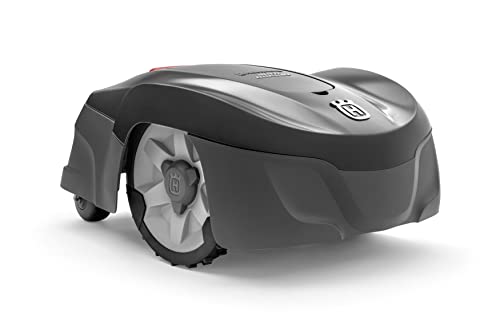
Husqvarna Automower 115H 4G Robotic Lawn Mower for 0.4 Acre
The Automower 115H 4G is a useful benchmark for owners who value an established boundary-wire system over antenna placement or camera mapping. Its high-cut orientation can suit common residential turf, but the cable installation and current listing availability should be weighed before purchase.

LawnMaster OcuMow VBRM601YCM MAX Wire-Free Robot Lawn Mower
The OcuMow MAX extends LawnMaster’s optical concept into a higher square-foot band. It is a stronger candidate than the smaller portable model when the lawn is still simple but takes too long for repeated short sessions; complex islands and indistinct edges remain the important caveats.
Frequently asked questions
Does tree cover stop an RTK mower?
It can reduce or interrupt satellite positioning, depending on canopy, base placement and the mower's other sensors. Confirm performance for the actual site.
Can the mower cross exposed roots?
Minor broad roots may be passable for some models, but repeated contact can strand the mower and harm turf. Significant roots should usually be excluded.
Will a robot mulch autumn leaves?
Light dry leaves may be chopped, but heavy piles, sticks and wet debris can obstruct operation. Clear the lawn and follow the model's instructions.
Bottom line
Use the answer above as a decision framework, then verify the exact product manual, current listing and conditions in your own lawn. Model generations, software features and included accessories can change.