Draw an operational map
Sketch turf sections, forbidden islands, corridors, slopes, tree cover and the charging location. Add temporary obstacles such as a trampoline that moves or a play area used on weekends. This map turns vague complexity into requirements. Count exclusions and zones so a product is not selected before discovering that its app or controller supports fewer areas than the property needs.
Choose navigation from site evidence
RTK can offer editable maps where sky and base-station communication remain strong. Vision or LiDAR may help around physical features, though indistinct grass-to-grass edges can still be difficult. Boundary wire creates a fixed reference but requires installation and repair. Hybrid systems can combine signals. None is universally superior, so use the wire-free finder to expose the property's tradeoffs.
Distinguish detection from avoidance
A camera or sensor may notice an object without safely identifying every hose, toy, animal or low obstacle. Read the current limitations and keep the lawn clear. Complex yards increase encounters with furniture and landscaping, making supervised commissioning essential. Create permanent exclusions around ponds, fire pits and fragile beds rather than expecting object detection to serve as the only barrier.
Plan change management
Map editing should be understandable enough for the owner to adjust a reseeded patch, construction area or seasonal bed without rebuilding the entire property. Check whether updates require walking the boundary, steering the mower, moving wire or relocating a beacon. Save account and map information according to the manufacturer's instructions so a phone replacement does not create an avoidable setup crisis.
Evaluate failures before features
Ask where the mower will stop if reception drops, a wheel spins or a corridor is blocked. Review notifications, manual recovery and the weight of the machine. A sophisticated map is less useful if the owner cannot locate or move the unit. The best complex-yard system makes ordinary exceptions visible and recoverable instead of hiding them behind an impressive navigation label.
For a product-led next step, compare Wire-Free Robotic Lawn Mowers or use the yard-fit finder.
Products to evaluate against this advice
As an Amazon Associate, we may earn from qualifying purchases.

ANTHBOT Genie 3000 Wire-Free Robotic Lawn Mower for Large Yards
The Genie 3000 is the high-capacity member of the verified Genie group. Its value is less about owning the biggest model and more about whether the yard requires several mapped areas, long travel distances and dependable route planning between them.
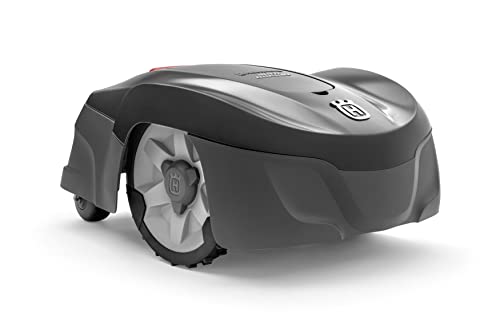
Husqvarna Automower 115H 4G Robotic Lawn Mower for 0.4 Acre
The Automower 115H 4G is a useful benchmark for owners who value an established boundary-wire system over antenna placement or camera mapping. Its high-cut orientation can suit common residential turf, but the cable installation and current listing availability should be weighed before purchase.

LawnMaster OcuMow VBRM601YCM MAX Wire-Free Robot Lawn Mower
The OcuMow MAX extends LawnMaster’s optical concept into a higher square-foot band. It is a stronger candidate than the smaller portable model when the lawn is still simple but takes too long for repeated short sessions; complex islands and indistinct edges remain the important caveats.
Frequently asked questions
What makes a yard complex for a robot mower?
Multiple zones, narrow links, heavy tree cover, islands, abrupt slopes and frequently changing obstacles all add navigation or setup demands.
Is a camera-based mower best for obstacles?
It may help, but detection limits vary by model and object. Dangerous areas still need approved exclusions or physical protection.
Should I hire an installer?
Professional planning can be worthwhile when boundaries, slopes or signal placement are difficult. Confirm who supports later map or wire changes before committing.
Bottom line
Use the answer above as a decision framework, then verify the exact product manual, current listing and conditions in your own lawn. Model generations, software features and included accessories can change.