Translate acreage into a weekly operation
Estimate real mowable area, growth rate and the weeks of active mowing. For the zero-turn, include driving, fueling or charging, cleanup and transport between sections. For robots, include charging cycles, restricted hours, map management, inspection and the possibility that more than one unit is required.
Distinguish maintenance from recovery
A zero-turn can make a planned pass through taller grass when conditions permit. Robots generally perform best by clipping small amounts frequently. A site that often becomes overgrown because of events, hay-like areas or seasonal access may continue to need conventional high-capacity equipment.
Map slopes and hazards
Zero-turn handling on slopes depends on the specific machine and operator guidance; robotic slope limits also vary between working zones and boundaries. Roads, water, steep banks and public access demand a safety plan regardless of format. Never infer safe operation from marketing footage of a different property.
Compare staffing with monitoring
Robots reduce seat time but do not eliminate management. Someone must remove hazards, inspect blades, respond to faults and coordinate service. A zero-turn concentrates labor into scheduled sessions and requires a trained operator. Assign each responsibility to a real person before calculating savings.
Prepare for downtime
One disabled zero-turn can stop the entire mowing plan, while a multi-robot fleet may preserve partial coverage. Conversely, a conventional mower can recover a backlog quickly after repair. Evaluate local parts, transport, diagnostics and rental options alongside the equipment price.
For a product-led next step, compare Wire-Free Robotic Lawn Mowers or use the yard-fit finder.
Products to evaluate against this advice
As an Amazon Associate, we may earn from qualifying purchases.

LawnMaster OcuMow VBRM601YCM MAX Wire-Free Robot Lawn Mower
The OcuMow MAX extends LawnMaster’s optical concept into a higher square-foot band. It is a stronger candidate than the smaller portable model when the lawn is still simple but takes too long for repeated short sessions; complex islands and indistinct edges remain the important caveats.

ANTHBOT Genie 3000 Wire-Free Robotic Lawn Mower for Large Yards
The Genie 3000 is the high-capacity member of the verified Genie group. Its value is less about owning the biggest model and more about whether the yard requires several mapped areas, long travel distances and dependable route planning between them.
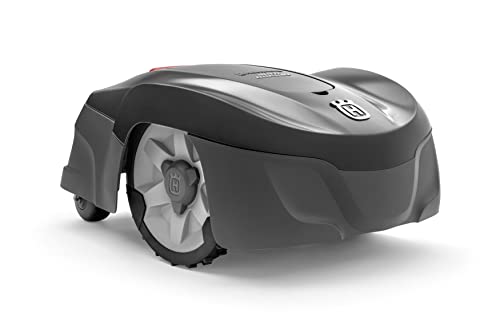
Husqvarna Automower 115H 4G Robotic Lawn Mower for 0.4 Acre
The Automower 115H 4G is a useful benchmark for owners who value an established boundary-wire system over antenna placement or camera mapping. Its high-cut orientation can suit common residential turf, but the cable installation and current listing availability should be weighed before purchase.
Frequently asked questions
Can robot mowers match a zero-turn's speed?
They use a different model: frequent autonomous maintenance rather than one fast attended pass. Compare completed weekly coverage, not travel speed.
Which produces better stripes?
Striping depends on mower design, turf and pattern. Many robot systems prioritize continuous maintenance rather than pronounced operator-planned stripes.
Could a property use both?
Yes. Robots can maintain selected finished areas while a zero-turn handles recovery work, outer fields or sections unsuitable for automation.
Bottom line
Use the answer above as a decision framework, then verify the exact product manual, current listing and conditions in your own lawn. Model generations, software features and included accessories can change.