List the objects that matter
A broad tree trunk, low toy, hose, wire fence and flowerbed edge present different sensing problems. Identify the property's recurring hazards and search the manual for explicit handling guidance. A generic obstacle-avoidance claim cannot establish performance on every object size, material and movement.
Consider light and seasonal change
Cameras may encounter glare, deep shadow, darkness and major color changes as turf dries or leaves accumulate. LiDAR has different challenges involving geometry, range and certain surfaces. Ask how the mower operates at the hours you intend to schedule and in the seasons when it will actually run.
Separate mapping from avoidance
A sensor may help build a map without being the primary last-second obstacle detector. Another mower may use cameras for object classification but rely on a different positioning method for boundaries. Product comparisons should identify each sensor's job rather than awarding points for the number of technologies listed.
Review privacy and data handling
A camera-equipped mower raises questions about image processing, storage, account security and views beyond the property. Read the current privacy controls and determine whether processing occurs locally or through connected services. LiDAR is not automatically offline; connectivity depends on the complete product.
Demand predictable safe behavior
When sensing becomes uncertain, the mower should respond according to documented safety logic. Test new areas under supervision and keep small, fragile or living obstacles out of the route. Detection features supplement yard preparation; they do not replace it.
For a product-led next step, compare Wire-Free Robotic Lawn Mowers or use the yard-fit finder.
Products to evaluate against this advice
As an Amazon Associate, we may earn from qualifying purchases.

ANTHBOT M5 RTK and Vision Robotic Lawn Mower
The non-LiDAR M5 ASIN belongs on its own page only because Amazon identifies a different navigation configuration. It may appeal to yards with good satellite visibility, while the similarly named LiDAR version warrants separate setup and obstacle-detection questions.
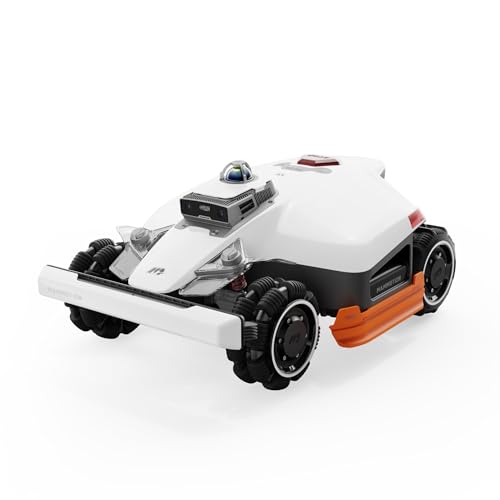
Mammotion LUBA 3 AWD 3000H Robot Lawn Mower for 0.75 Acre
The LUBA 3 AWD 3000H is specifically the high-cut 3000H identity, not a generic LUBA 3. Its 80% slope claim and multi-sensor navigation target demanding properties, but weight, wet-ground behavior and access between zones deserve close scrutiny.

YARDCARE V100 Robot Lawn Mower with HD Vision Navigation
The V100 is a modest-capacity vision mower aimed at straightforward lawns. Its camera and collision sensors reduce reliance on buried wire, but buyers should evaluate how the lawn edge looks to a camera under shadows, leaves and changing seasonal color.
Frequently asked questions
Does LiDAR work in darkness?
LiDAR does not require ordinary scene illumination like a camera, but the mower's complete nighttime behavior depends on all sensors and software.
Can camera vision identify pets?
Some systems claim object categories, but performance varies. Keep pets away during operation rather than relying on recognition.
Is a hybrid sensor mower always better?
Not automatically. Integration, software, property fit and support matter more than the raw number of sensors.
Bottom line
Use the answer above as a decision framework, then verify the exact product manual, current listing and conditions in your own lawn. Model generations, software features and included accessories can change.