Calculate mowable area
For a rectangular section, multiply length by width and add all grass zones. For an irregular lawn, divide it into simple shapes or use a reliable map measurement, then subtract beds and hardscape. Convert acres to square feet by multiplying by 43,560. Keep the unrounded total so a yard just above a common capacity band is not mistakenly treated as smaller.
Adjust for working difficulty
Open connected turf may need little added reserve. Obstacles, repeated turns, several zones and vigorous seasonal growth consume operating time, so the size calculator applies visible planning factors. Weather and restricted schedules also matter. This adjustment is a shortlist method, not a manufacturer claim; the exact machine's rating and operating assumptions remain controlling.
Round upward to a useful band
Compare products whose verified listed capacity meets or exceeds the adjusted area. Avoid selecting a model that sits below the requirement because the lawn seems close enough. At the other extreme, a much larger unit may bring a wider chassis, different dock or commercial workflow that adds no benefit. Choose adequate reserve without ignoring physical fit.
Check width and station space
Measure gates, passages and the proposed charging location. A compact acreage does not mean every small-capacity mower has a narrow body or minimal station clearance. Installation diagrams may require straight approach distance and side space. Include vegetation and open gate hardware in the measurement so the route remains usable throughout the season.
Confirm terrain after capacity
Once the area shortlist is built, filter by the steepest measured grade, boundary system, tree cover and separated zones. Capacity cannot compensate for insufficient traction or an unsupported corridor. Compare exact products side by side and read the manual before ordering. If no verified model meets every requirement, revise the route, exclude the difficult area or consider multiple machines.
For a product-led next step, compare Robotic Lawn Mowers for Hills or use the yard-fit finder.
Products to evaluate against this advice
As an Amazon Associate, we may earn from qualifying purchases.
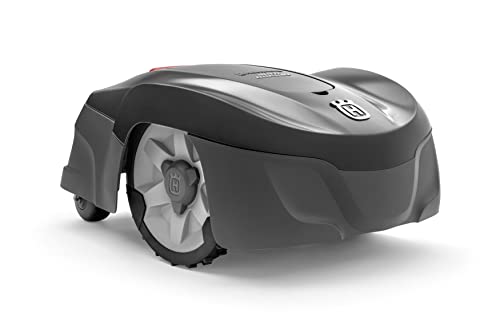
Husqvarna Automower 115H 4G Robotic Lawn Mower for 0.4 Acre
The Automower 115H 4G is a useful benchmark for owners who value an established boundary-wire system over antenna placement or camera mapping. Its high-cut orientation can suit common residential turf, but the cable installation and current listing availability should be weighed before purchase.

LawnMaster OcuMow VBRM601YCM MAX Wire-Free Robot Lawn Mower
The OcuMow MAX extends LawnMaster’s optical concept into a higher square-foot band. It is a stronger candidate than the smaller portable model when the lawn is still simple but takes too long for repeated short sessions; complex islands and indistinct edges remain the important caveats.

ANTHBOT M9 Wire-Free Robotic Lawn Mower with Garage for 1/4 Acre
The M9 listing is notable because shelter is part of the bundle rather than a separate compatibility purchase. That can simplify installation planning, though buyers should still distinguish the garage from the charging base and verify how the mower maps shaded or tree-lined sections.
Frequently asked questions
Should mower capacity equal my lawn area exactly?
Choose a planning band above the adjusted mowable area so normal complexity and interruptions do not leave the system operating at its limit.
Is lot size the correct number to use?
No. Use grass the robot will actually maintain after subtracting the home, driveway, beds, water and other excluded areas.
Can a mower be too large for a yard?
Yes. Extra capacity may come with a larger body, station or operating pattern that is awkward in compact spaces. Verify physical fit as well as acreage.
Bottom line
Use the answer above as a decision framework, then verify the exact product manual, current listing and conditions in your own lawn. Model generations, software features and included accessories can change.