Audit the yard after rain
Depressions and soft areas are easiest to identify when drainage patterns are visible. Look for wheel tracks, standing water and soil that compresses underfoot. Repair drainage causes where practical rather than repeatedly filling a hole that will return after the next storm.
Remove small traps, not natural character
A lawn does not need to become perfectly flat. Focus on gaps that can swallow a wheel, roots that strike the deck, loose stones, irrigation hardware and narrow ruts that steer the machine. Follow sound lawn-care practices when topdressing or leveling so grass is not buried under an excessive layer.
Check ground clearance and wheel layout
Published cutting height does not equal chassis clearance. Compare wheel diameter, wheel spacing, deck movement and the shape of the underside. A long machine may bridge a shallow dip but ground out on a sharp crest; a compact mower may turn easily yet drop a wheel into a narrow hole.
Build stable crossings
Paths between zones may need a firm, level corridor of the width and surface permitted by the manual. Loose gravel, tall edging and slick pavers can interrupt a route. Do not improvise a steep ramp over a curb without checking clearance and boundary behavior.
Use the first cycles as a survey
Set a conservative height, remove people and pets, and watch the mower cover each zone. Note locations where it spins, reverses repeatedly or scrapes. Correct the property or edit the map before expanding the schedule. An unattended test is not a substitute for observing real movement.
For a product-led next step, compare Robotic Lawn Mowers for Hills or use the yard-fit finder.
Products to evaluate against this advice
As an Amazon Associate, we may earn from qualifying purchases.
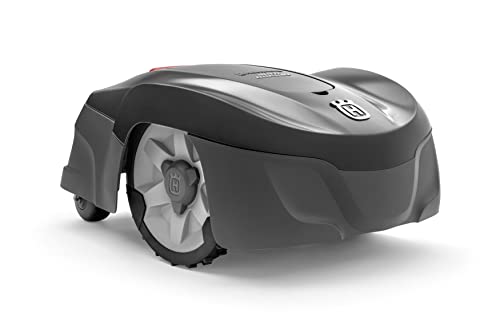
Husqvarna Automower 115H 4G Robotic Lawn Mower for 0.4 Acre
The Automower 115H 4G is a useful benchmark for owners who value an established boundary-wire system over antenna placement or camera mapping. Its high-cut orientation can suit common residential turf, but the cable installation and current listing availability should be weighed before purchase.

LawnMaster OcuMow VBRM601YCM MAX Wire-Free Robot Lawn Mower
The OcuMow MAX extends LawnMaster’s optical concept into a higher square-foot band. It is a stronger candidate than the smaller portable model when the lawn is still simple but takes too long for repeated short sessions; complex islands and indistinct edges remain the important caveats.

ANTHBOT M9 Wire-Free Robotic Lawn Mower with Garage for 1/4 Acre
The M9 listing is notable because shelter is part of the bundle rather than a separate compatibility purchase. That can simplify installation planning, though buyers should still distinguish the garage from the charging base and verify how the mower maps shaded or tree-lined sections.
Frequently asked questions
Do large wheels guarantee better rough-terrain performance?
No. Wheel size helps in some cases, but clearance, weight distribution, traction control and yard geometry also determine whether a mower gets through.
Can a robot mower cross exposed tree roots?
Small gradual roots may be manageable, while high or sharp roots can stop the mower or contact its deck. Exclude uncertain areas.
Should I level the entire yard first?
Usually not. Repair the specific holes, ridges, soft spots and route conflicts that threaten clearance or traction.
Bottom line
Use the answer above as a decision framework, then verify the exact product manual, current listing and conditions in your own lawn. Model generations, software features and included accessories can change.