Compare data on equal terms
Do not mix sound power and sound pressure values or compare measurements taken at different distances. Look for the test standard, operating mode, and uncertainty when published. Marketing words such as silent or whisper-quiet are not substitutes for a documented measurement.
Use the property line test
Stand at the nearest neighbor boundary, bedroom-facing side, and reflective patio while the mower cuts normal grass. Repeat near the dock and on transitions. A brief personal check can reveal tones or impact noises that a single specification cannot predict.
Investigate new noises
Stop and lock out a mower that suddenly rattles, grinds, buzzes, or vibrates. Check for sticks, wire, loose fasteners, chipped blades, packed clippings, wheel damage, and contact with hardscape according to the maintenance instructions. Continued operation can enlarge a small fault.
Change the route, not just the hour
Repeated edge passes beside a fence, loose paver, metal drain, or hollow deck can create more disturbance than open-lawn cutting. Correct the obstacle or adjust the mapped boundary within approved clearances. Do not silence warnings or modify guards to reduce sound.
Respect quiet hours
Local ordinances, association rules, leases, or simple courtesy may limit overnight operation even if an electric mower is exempt from some equipment restrictions. A considerate schedule protects acceptance of the technology and reduces nighttime wildlife exposure at the same time.
For a product-led next step, compare Wire-Free Robotic Lawn Mowers or use the yard-fit finder.
Products to evaluate against this advice
As an Amazon Associate, we may earn from qualifying purchases.

ANTHBOT Genie 3000 Wire-Free Robotic Lawn Mower for Large Yards
The Genie 3000 is the high-capacity member of the verified Genie group. Its value is less about owning the biggest model and more about whether the yard requires several mapped areas, long travel distances and dependable route planning between them.
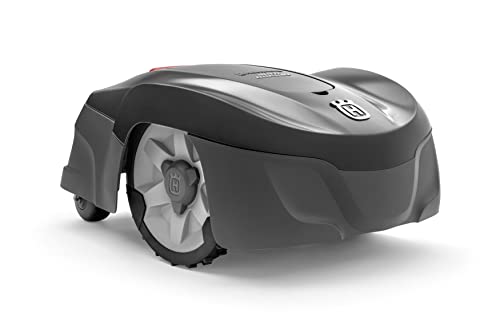
Husqvarna Automower 115H 4G Robotic Lawn Mower for 0.4 Acre
The Automower 115H 4G is a useful benchmark for owners who value an established boundary-wire system over antenna placement or camera mapping. Its high-cut orientation can suit common residential turf, but the cable installation and current listing availability should be weighed before purchase.

LawnMaster OcuMow VBRM601YCM MAX Wire-Free Robot Lawn Mower
The OcuMow MAX extends LawnMaster’s optical concept into a higher square-foot band. It is a stronger candidate than the smaller portable model when the lawn is still simple but takes too long for repeated short sessions; complex islands and indistinct edges remain the important caveats.
Frequently asked questions
Are robot mowers quieter than gas mowers?
They commonly avoid the continuous combustion-engine sound of conventional gasoline equipment, but exact levels vary. Compare verified data and real operation rather than assuming every robot is quieter in every setting.
Why is my robotic mower getting louder?
Worn or loose blades, trapped debris, deck buildup, wheel damage, hard-object contact, and bearing or motor issues can change sound. Stop and inspect it under the manual before continuing.
Is nighttime mowing acceptable because the mower is quiet?
Noise is only one consideration. Neighbors, local rules, visibility, pets, theft, sprinklers, and nocturnal wildlife can make a daytime schedule more responsible.
Bottom line
Use the answer above as a decision framework, then verify the exact product manual, current listing and conditions in your own lawn. Model generations, software features and included accessories can change.